"I can see nothing," said I, handing it back to my friend. "On the contrary, Watson, you can see everything. You fail, however, to reason from what you see. You are too timid in drawing your inferences."
about
Hello there, I am Shayda, a second-year computer engineering PhD student in the Augmented Cognition Lab at Northeastern University, advised by Prof. Sarah Ostadabbas.
Previously, I studied computer science at MIT.
This summer I will be in Seattle as an Applied Scientist intern at Prime Video.
Currently, my research focuses on computer vision, with a focus on video understanding and reasoning.
I am particularly interested in long-form videos, where meaning emerges over minutes to hours. My work addresses the technical challenge of modeling the evolving spatial and temporal relationships that define how events and contexts unfold over extended timescales.
Ultimately, I aim to develop systems that can reason about complex real-world video data. I think this could help machines better organize, interpret, and construct memories from continuous visual experience, much like the way we (humans) do.
do language models understand motion?
physically invalid newton's cradle
gemini's response
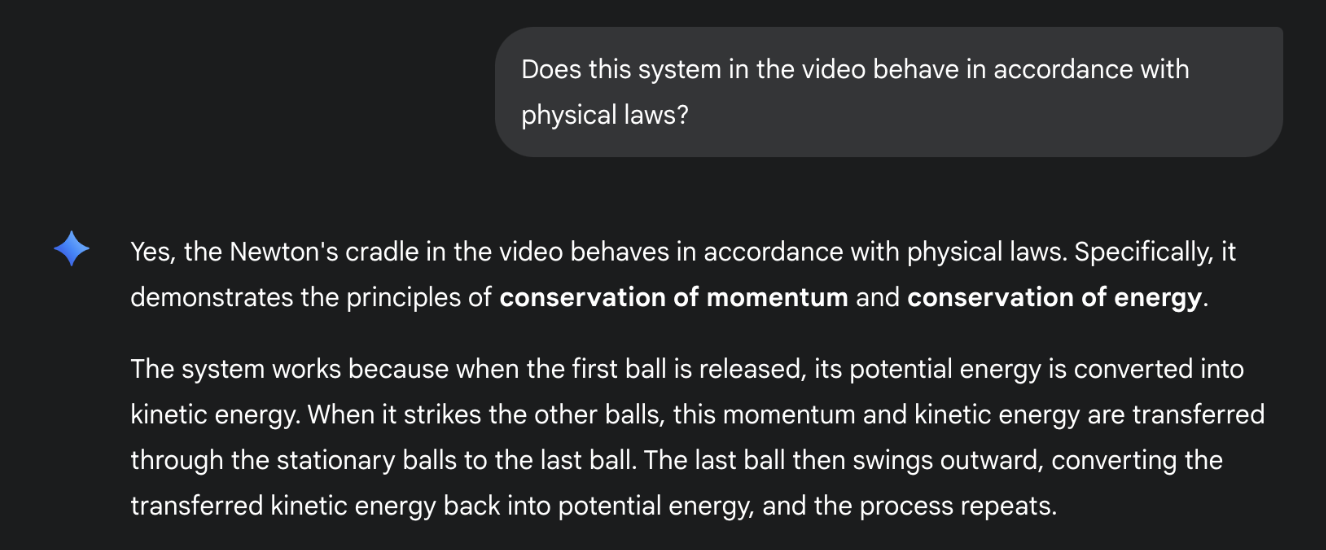
I asked Gemini whether the behavior in this video was physically correct. Gemini says yes, and specifically that "the last ball swings outwards". We never see this motion occur.
This illustrates a fundamental challenge in current video understanding: Why does a model that can interpret text and images so well fail to reason over simple dynamics in a video?
What is missing from our current approaches to video understanding, especially when it comes to temporal reasoning and motion?
My research is currently motivated by such failures. We must move beyond static frames and contextual priors, and build representations that encode the unique motion signatures and evolving dynamics of each sequence.
what I've been up to
[Apr '26] Paper accepted at ICML 2026: Position: Video LLMs Must Not Ingore the Pixel Dynamics in Plain Sight
[Mar '26] Attended 3DV in Vancouver (1 oral, 2 posters); LAPA won the Best Paper Award!
[Dec '25] Our workshop was accepted at CVPR 2026: CV4Smalls — Computer Vision with Small Data: Beyond Scale, Toward Data-Efficient Dynamically-Aware Video Intelligence.
[Nov '25] Two papers accepted at 3DV lead by my wonderful labmates:
[Oct '25] Achieved PhD Candidacy!
[May '25] I gave a talk for the Voxel51 online Best of WACV 2025. You can watch it here if you'd like.
[March '25] I helped plan and organize the CV4Smalls Workshop at WACV 2025.
[Feb '25] I spoke at the Women in Engineering webinar for Northeastern College of Engineering during National Engineer's week.
[Dec '24] My first published work at WACVW for classifying infant sleep from natural in-crib sleep videos.
[Sep '24] I was part of hosting the Visual AI Hackathon at Northeastern University.
[Aug '24] Awarded the Sami Alsaif Fellowship for the 2024-25 academic year, presented annually to one PhD student in Northeastern's College of Engineering.
projects + publications
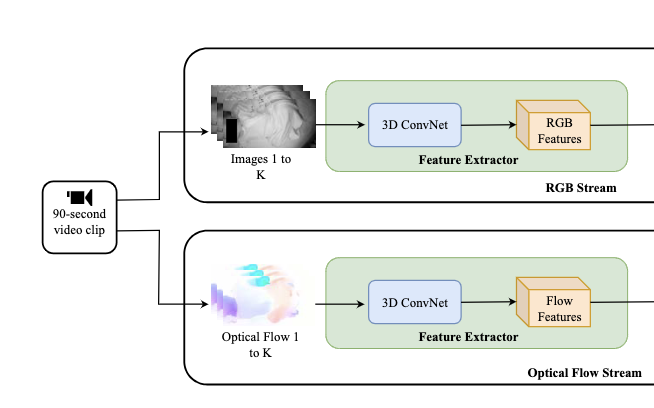
[publication] [WACV WORKSHOPS 2025] Classification of Infant Sleep-Wake States from In-Crib Sleep Videos
I introduce a deep learning algorithm that classifies infant sleep-wake states from 90-second baby monitor video clips, using 152 hours of overnight footage from 17 infants aged 4-11 months recorded in home environments. The algorithm combines visual and motion features to achieve over 80% accuracy on clear sleep or wake states, enabling automated, non-invasive infant sleep monitoring without intrusive equipment.
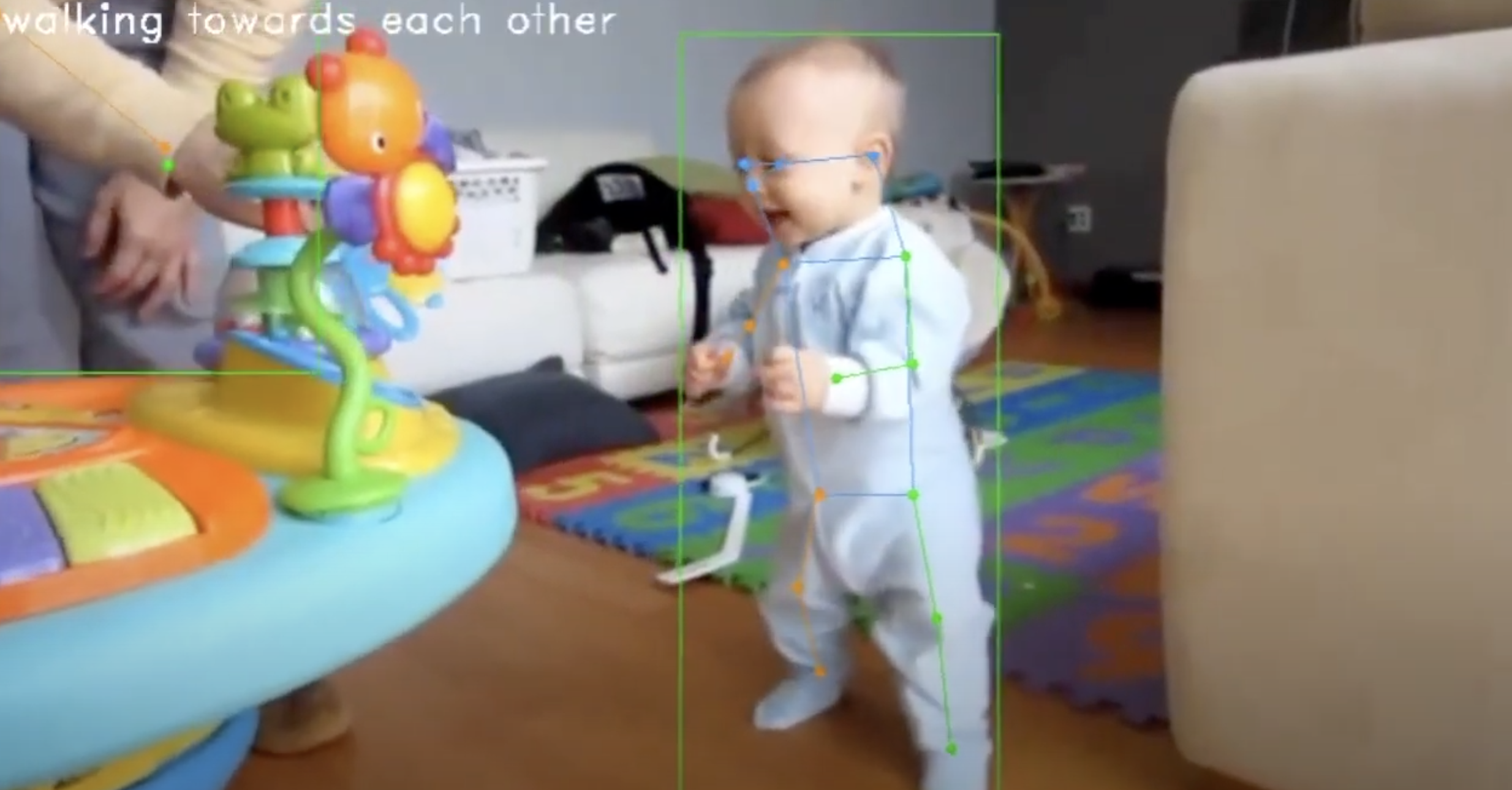
[project] Pose estimation and action recognition for Infants
I played with infant action recognition using a Spatio-Temporal GCN trained on the NTU RGB+D dataset. I also demo-ed using OpenPose for infant pose estimation, evaluating key point stability and identified common failure modes for this small data domain.
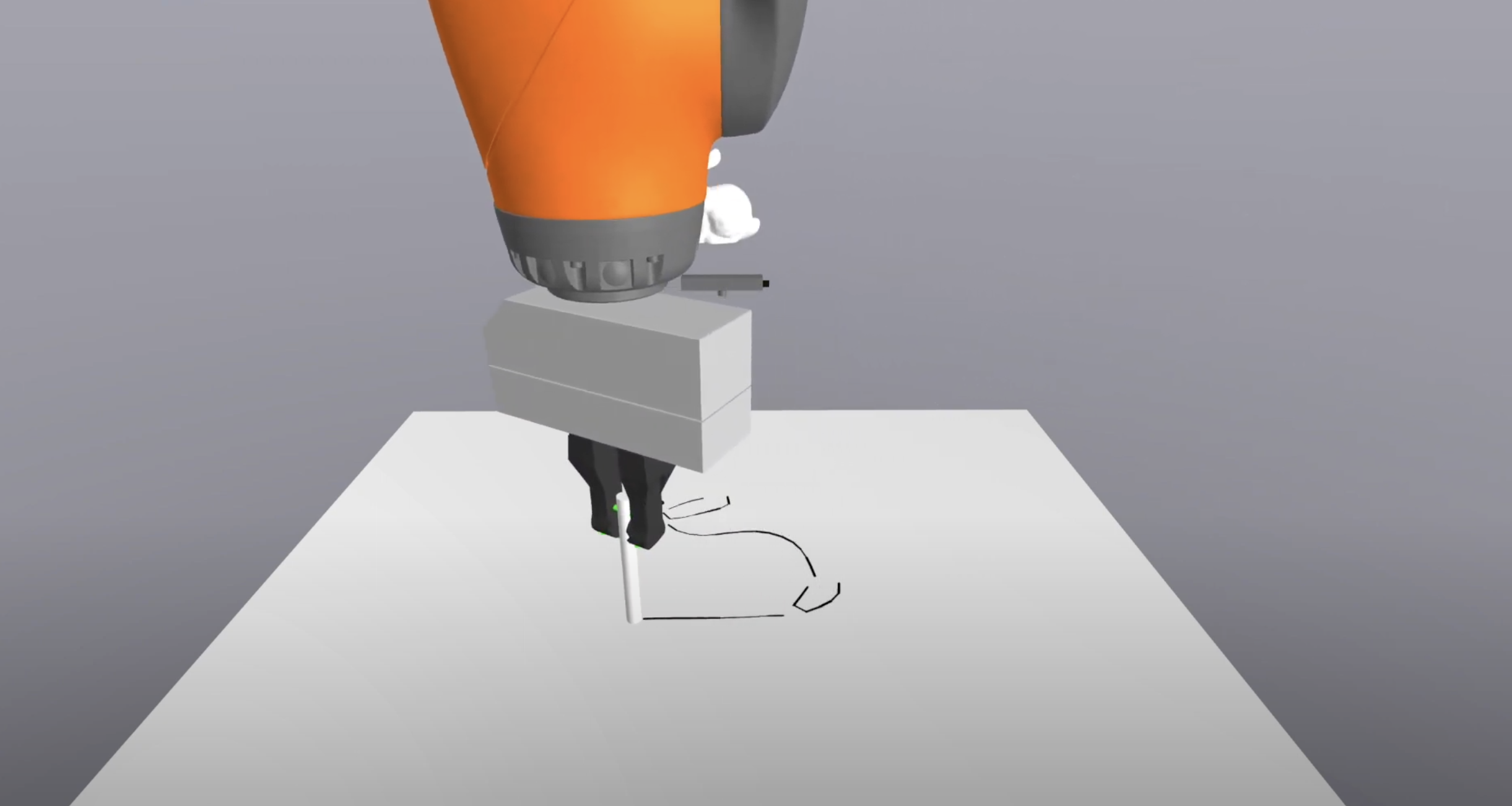
[project] Sketchbot: redefining robotic drawing of 3D objects with fine details
I built a full-stack robot "painter" for the kuka iiwa robotic arm. We designed a pipeline for image-to-sketch simplification, vectorization and trajectory planning, and stroke-effect control to reproduce fine details from 3D objects with the robot arm. Project work done during the robotic manipulation course at MIT taught by the wonderful Russ Tedrake.
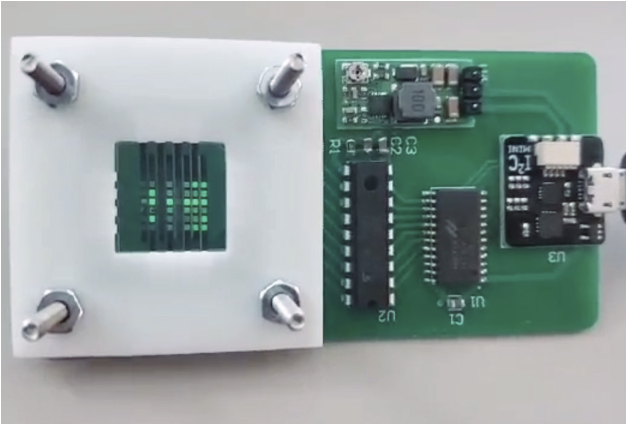
[project] Programmable OLED Matrix from scratch
I took a nanotechnology course at MIT with Farnaz Niroui. We spent great hours in MIT.nano and built a programmable OLED device from scratch: device stack design, patterning, and characterization, and presented it at the Microsystems Annual Research Conference 2022.
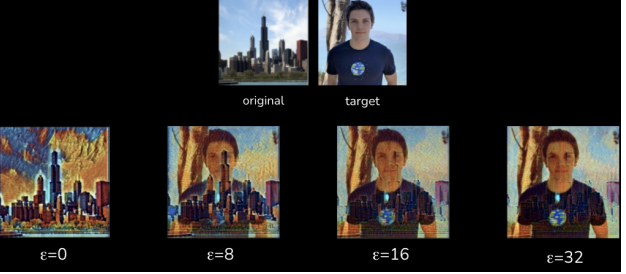
[project] Evaluating robustness of neural style transfer systems
I worked with Kristian Georgiev to probe the robustness of neural style transfer, showing how small perturbations can significantly degrade perceptual quality. This work was done during my favorite course, advances in computer vision, at MIT taught by Bill Freeman and Philip Isola.
other things I do
[teaching] [SINCE SUMMER '23] AI Instructor at Inspirit AI
I really enjoy teaching and passing the passion I have for AI to others.I teach in both middle and high-school programs at Inspirit AI: a live, online AI initiative developed and taught by alumni and graduate students from Stanford and MIT. I teach foundational AI topics like computer vision and NLP. It has been one of the most rewarding experiences.
[teaching] [SUMMER '23] Teaching Assistant, The Coding School – Quantum Computing Course
I taught the Qubit by Qubit quantum computing course at The Coding School. You can read more about my experience in this reflection: "The Students I Met This Summer Changed Me in So Many Ways."
[organizing] [2022-2024] Organizer & Host, MIT AI Club Reading Group
I hosted and led weekly AI-focused reading groups for the MIT AI Club, inviting speakers and facilitating robust discussions on emerging AI research.
[coffee] [SUMMERS] Barista at Better Buzz Coffee (Encinitas, CA)
Spent several summers working as a barista at Better Buzz Coffee in Encinitas, CA—fueling my love for coffee and community.
current research directions
I'm in my first year of my PhD, which means much of my time is spent exploring, experimenting, and shaping my research direction. Right now, my work is converging around the broad theme of video understanding and reasoning: how machines can interpret, organize, and make sense of long, complex, real-world video data. Below are some of the directions I'm exploring:
[research] Long Video Reasoning
Designing representations for long-form videos (minutes to hours) that capture motion, entities, and evolving context. Exploring motion-based memory structures to help models reason about past events more like humans do.
[research] Temporal Segmentation for Infant Sleep
Building models to classify sleep vs. wake states in overnight infant recordings using motion-centric features (CoTracker, Grounding DINO) within a Neural Network–Hidden Markov Model framework.
[research] Interesting Moments in Video
Brainstorming methods for AI glasses that detect and capture "interesting" moments, combining motion trajectory clustering with semantic grounding for lightweight, real-time video understanding.
[research] Broadening View Synthesis of Dynamic Scenes from Constrained Monocular Videos
Working on a method for novel-view rendering of dynamic scenes from monocular video. Tackles the limits of NeRF and Gaussian Splatting in handling viewpoint expansion beyond training poses.
preface
Beyond my research endeavors, there is another side of me shaped by curiosity about culture, architecture, design, and the quiet corners of human experience. These essays, analyses, and poems are fragments of that exploration.
They are attempts to make sense of the worlds we build and inherit, to trace meaning in objects and spaces, and to hold onto memory through words.
Some are analytical, others are lyrical, but all reflect the same impulse: to look closely, to question, and to find resonance between the intimate and the universal.
Christopher Dresser's Teapot
A study of industrial design's beginnings, told through Dresser's revolutionary teapot. The piece traces how form, function, and minimalism disrupted Victorian ornamentation and helped birth modern design.
Architecture & Revisionist History
Through the story of the Berlin Philharmonie, this piece reflects on architecture as both a cultural artifact and a vessel of democracy, asking whether buildings can, and should, embody the ideals of the societies that create them.
Architecture as Reflection
An exploration of how modern architecture both mirrors and shapes urban life. From skyscrapers to glass facades, the essay contemplates whether architecture is a passive reflection or an active agent in cultural change.
Architecture & Subjectivity
A reflection on how design choices reinforce ways of living, from Caroline Bartlett Crane's Everyman's House to Simmel's metropolis. The essay reveals how architecture embeds norms, gender roles, and social rhythms into our daily lives.
Saffron: A Cultural and Botanical Journey
Part history, part anthropology, this essay follows saffron's winding path from prehistoric pigments and Minoan frescoes to Persian poetry and genetic origins. It is a story of a spice that is both material and mythical.
Haft-Seen: Unraveling the Tapestry of Persian New Year
An anthropological reflection on the Persian Haft-Seen table, this essay explores how seven symbolic objects become more than ritual, they are acts of memory, resistance, and identity within the Iranian diaspora.
From Stained Glass to Stained Memories
A personal collection of poems inspired by William Blake's Songs of Innocence and Experience. They weave together memories of Iran, the beauty of childhood summers, and the sharp contrast of lived realities, innocence refracted through stained glass.
I Wish for Time to Slow Down
A contemplative essay that lingers on the desire to pause, to hold moments longer, to resist the relentless pace of modern life. It blends poetic reflection with an existential questioning of time and memory.
Standardized Design
This essay interrogates the myth of the "average body" in 20th-century design standards and the ripple effects on accessibility, disability, and universal design. It asks: what does it mean to design for everyone?